
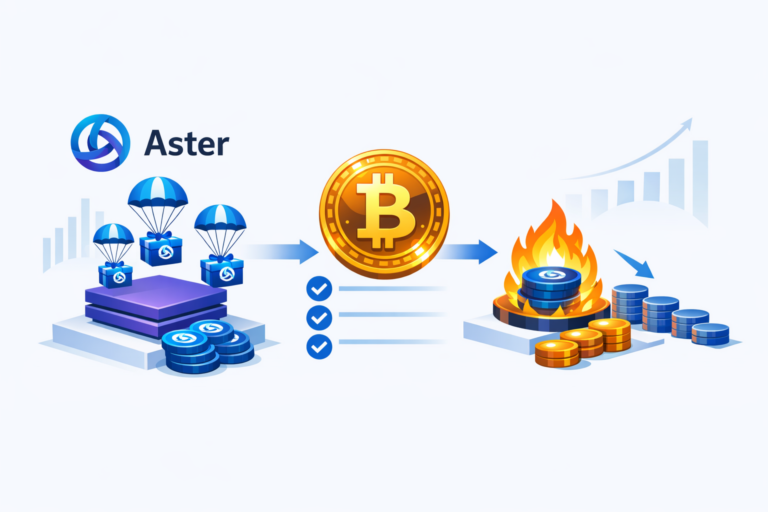
Aster settles 911,964.22 ASTER tokens in Stage 5 airdrop, burning half while opening a claim window for users.
The Aster ecosystem has completed a major step in its token distribution plan. The project has settled 911,964.22 ASTER tokens under the stage 5 airdrop distribution. Developers confirmed that half of the allocation was burned permanently as the rest went to the project treasury.
This distribution is another step in the token’s overall approach to supply management. The system also introduces the choice mechanism for the eligible users. Participants can either claim part immediately or wait to release the full allocation.
Aster Settles Stage 5 Airdrop With Major Token Burn
The project behind ASTER verified 911,964.22 tokens were processed in the Stage 5 distribution event. Out of this total, 455,982.11 tokens were permanently burnt. Meanwhile the remaining 455,982.11 tokens were sent to the official treasury contract.
[Airdrop Stage 5 Burn & Claim Notice]
911,964.22 $ASTER has been settled as part of the Aster Airdrop Stage 5 distribution, of which 455,982.11 $ASTER has been permanently burned, and 455,982.11 $ASTER transferred to the Aster Treasury Contract.
As scheduled, the 50% Immediate…
— Aster (@Aster_DEX) March 9, 2026
The token burning decreases the circulating supply in the ecosystem. As a result of this, the project is aimed at strengthening long term scarcity. All the transactions from the distribution were logged onto blockchain networks and can still be publicly verified.
Related Reading: Aster Launches Layer-1 Testnet, Targets Mainnet Release in Q1 2026 – Ledger Tribune
The immediate claim window for the distribution was opened at 12:00 UTC on March 9, 2026. This period of claim will continue until 12:00 UTC, April 9, 2026. During this time, eligible users will be able to access the official claim portal and view their allocation of tokens.
Each allocation is split into two equal parts. First part is a base allocation of 50%. The second section is a bonus allocation of a further 50%.
Participants will have to choose how they wish to claim their tokens. This decision influences the amount of their allocation to which they ultimately get.
Users who claim the base allocation at once will be given the first 50% at once. However, the remaining bonus of 50% will be permanently burned up if they select this option. This mechanism brings a deflationary element to the token economy.
Or, users can opt to wait through a three month period of vesting. By waiting, they can unlock the option of full 100% allocation of their tokens. This approach provides incentives for long term participation in the ecosystem.
Deflationary Mechanism Designed to Reduce Market Pressure
The token claim structure is designed to have an impact on the dynamics of supply. Early claims cut the circulating supply by automatic token burning. For this reason, fewer tokens may be immediately available in the market.
Developers said this approach was one way to alleviate potential selling pressure. If many users claim early, then the system burns the unused bonus tokens. Therefore, the quantity of the circulating supply reduces with time.
The Stage 5 event is the continuation of previous supply control events within the ecosystem. On February 5, 2026, the project affirmed another massive token burn event. Developers said more than 44.4 million ASTER tokens were destroyed during the fifth buyback phase.
When combined with the previous Stage 4 burn event the total amount of tokens removed from supply amounted to approximately 98.4 million tokens. These burn events represent the project’s focus on maintaining a strict supply discipline.
In addition, the token distribution works in line with the overall technical roadmap of the project. The team is currently preparation for launching its own blockchain infrastructure. This new network will run under this name, Aster Chain.
Aster Chain Development Supports Ecosystem Expansion
The next blockchain network will be the project’s native infrastructure. Developers are looking forward to the mainnet launch in the first quarter of 2026. The transition will involve moving base platform activities to the new network.
Aster Chain is looking to provide support for decentralised trading, financial tools, and on chain applications. The blockchain will also embed token utility in the ecosystem services. As a result, ASTER tokens can have more use cases after the launch.
Stage 5 airdrop distribution is based on user activity in the platform. Participants qualified on factors such as perpetual trading volume and participation on the platform. These criteria rewarded users that contributed to network activity.
In order to claim their tokens, eligible participants must connect a compatible Web3 wallet. Wallets like MetaMask can be connected via the official Aster portal. Once connected, the users can see their token allocation and select their claim option.
All claim and burn transactions are processed through transparent block chain records. This transparency means that participants can create proof of the distribution data directly on the chain. Developers stressed that users should exclusively use official platforms to make the process.
The Stage 5 airdrop is, therefore, both a reward system and a supply management mechanism. By combining the use of token burns with vesting incentives the project aims to encourage long term participation. As the ecosystem gears up for the Aster Chain launch, the following steps may help stabilize token economics while expanding the future development of the platform.