
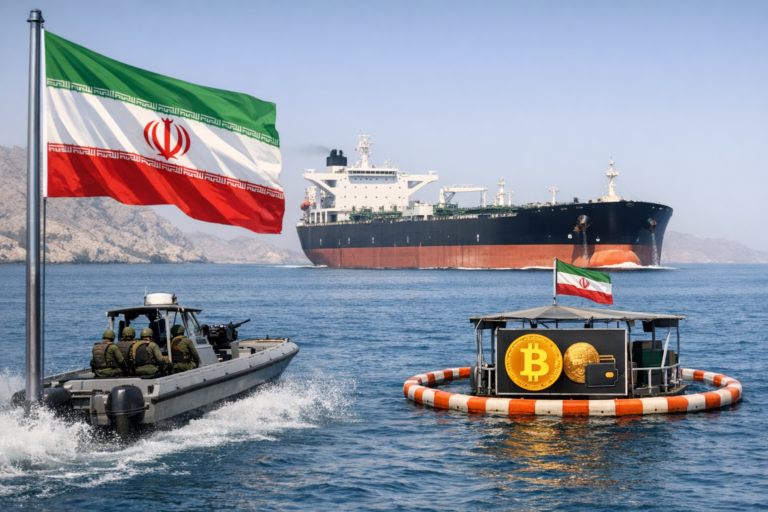
Iran plans crypto-based tolls in Strait of Hormuz, raising global concerns over trade routes, oil prices, and digital payment adoption.
Iran is planning a new system to charge oil tankers passing through the Strait of Hormuz. Reports say payments may be made using crypto or Chinese yuan for tolls. This move comes during a temporary ceasefire with the United States.
Iran proposes crypto toll system for oil tanker transit
According to Financial Times, Iran can impose a price of approximately 1 per barrel of oil. This is applicable to fully loaded tankers passing through the Strait of Hormuz. Tankers should also provide cargo information prior to transit along the route.
In addition, it is possible to pay with digital currencies such as Bitcoin. This enables quicker and nontraceable transactions. Unfilled tankers might not be required to pay these tolls. Thus, the system is primarily concerned with loaded ships.
Related Reading: Binance Defends Compliance After Report on Iran Crypto Links – Ledger Tribune
According to experts, a big oil tanker can cost approximately 2000000 per trip. In normal conditions, approximately 140 ships transit the strait on a daily basis. Consequently, Iran would be able to produce almost 2800000000 per day.
This is REALLY BIG.
Iran is charging ships a toll to pass the Strait of Hormuz, with payments being made in Crypto as per FT.
Tolls reportedly start at about $1 per barrel of oil, which translates to roughly $2 million per large tanker.
On an average day, around 140 ships… pic.twitter.com/SUaEWnuFng
— Ash Crypto (@AshCrypto) April 8, 2026
In less than a week, this figure may be nearly 20000000000 in crypto payments. This demonstrates the extent to which the financial impact may be. Thus, the demand of digital currencies can grow all around the world.
Moreover, this system can assist Iran to monitor ships and eliminate unlawful practices. According to the officials, the purpose will involve surveillance of traffic and preventing the transfer of weapons. The plan has however brought numerous concerns to the world.
Global trade risks rise as shipping and oil markets react
Strait of Hormuz is one of the most significant oil routes in the world. It handles about 20% of the world’s oil supply. Thus, any alteration in its activities can influence the world markets.
Shipping in the region has recently declined drastically. According to reports, traffic decreased by almost 95 percent since the end of February. There are approximately 800 vessels stuck in the Gulf area.
This has led to high prices of oil in the international markets. The price of crude oil has hit above 100 barrels. Prices were as high as $112 per barrel of some types of oil.
In addition, increased oil prices may impact a number of industries and consumers. There is a possibility of increased transportation and energy costs across the globe. Thus, the world economies might be affected soon.
Analysts also caution that crypto payments can diminish money monitoring. Conventional systems enable governments to keep track of transactions with ease. Nonetheless, crypto payments are more difficult to track or stop.
This change could pose a challenge to international financial regulators. It may also alter the international trade payment mechanisms. Thus, the situation is being monitored by some countries.
Geopolitical tensions grow as nations respond to new system
The plan has elicited both positive and negative responses among regional and global powers. Oman has rejected the idea of joint toll systems. It advocates free and open navigation in the international waters.
In the meantime, Donald Trump has made a comment on the situation. The ceasefire, he said, is subject to the maintenance of the waterway open. But he also spoke of potential collective actions to protect the route.
Analysts feel that this action would enable Iran to have greater influence on international trade routes. It can make the strait a narrow passage rather than an open sea. Thus, there is a risk of further escalation of geopolitical tensions.
Also, the need to make crypto payments can increase the demand of digital assets in the world. Nations might be required to keep crypto reserves to trade. This may enhance the presence of crypto in international finance.
Meanwhile, there are still issues of stability and security in the region. Energy supply chains can be impacted by any disruption in the strait. Thus, the global markets can be unpredictable within the next several weeks.
In general, the crypto toll system proposed by Iran may transform the world of trade and finance. It is a blend of geopolitics, energy markets, and digital currencies in a single action. The long-term effects of the situation will become more evident as the situation unfolds.

Bilal Hassan is a seasoned crypto journalist with over five years of experience covering blockchain, digital assets, and global fintech trends. His work focuses on market developments, regulatory shifts, and the evolving landscape of cryptocurrency adoption worldwide.