
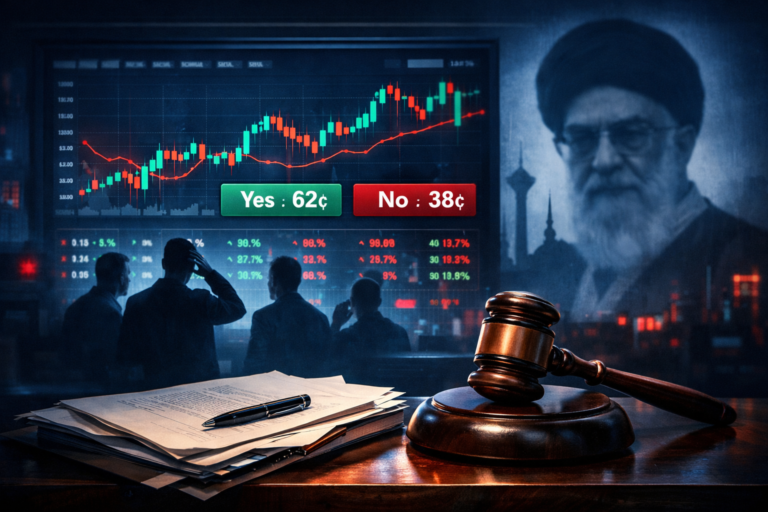
Traders file class action lawsuit against Kalshi, alleging hidden rules and unpaid contracts in the Ali Khamenei prediction market.
A class action lawsuit has been filed against prediction market platform Kalshi over a controversial political betting market. The dispute involves a contract about a prediction of whether Ali Khamenei would leave his position as the Supreme Leader of Iran. Traders allege that the platform did not make clear an important rule for payouts.
The lawsuit is based on the fact that a “death carveout” policy was not properly explained to users. Plaintiffs claim the rule was not mentioned anywhere in the simplified contract summary available to traders. As a result, users thought any departure from office would result in a full payout.
Traders Claim Hidden Rule Blocked Payouts After Khamenei Death
The dispute began after reports broke that Khamenei had died in late February of 2026. The prediction market enabled people to purchase contracts on whether he would leave office. Each “Yes” contract gave a promise of a one dollar payout should the event occur.
Related Reading: Crypto.com Launches OG Prediction Markets App Ahead of Super Bowl LX – Ledger Tribune
However, Kalshi did not agree to pay full amounts of the settlement to traders with “Yes” positions. The company invoked a policy known as a death carveout. According to that rule, markets where leadership changes are involved do not pay full value when death is the cause for exit.
The lawsuit alleges that rule was not properly disclosed prior to the event taking place. Plaintiffs say the platform added or highlighted the rule only after news about the death started circulating.
The complaint further alleges that the initial description of the market was clear and binary. It provided for settlement of one dollar per share in the event of any removal from office, including death.
Traders further accuse the platform of facilitating trade despite the widespread reports of death. According to the lawsuit, trading did not stop on February 28th as speculation about the incident continued. Plaintiffs allege that this activity promoted the purchase of “Yes” positions by a higher number of users.
Lawyers representing the traders say the platform knowingly let the new trades through despite the dispute over the payout. They say this behavior essentially lured more people into contracts that would not pay as expected.
The legal complaint was filed by a law firm, Novian & Novian LLP. It claims violations of contract and consumer protection laws in California. Plaintiffs allege the platform’s behavior resulted in serious financial harm to traders.
Kalshi Defends Actions and Points to Regulatory Requirements
Kalshi leadership vigorously denies the allegations in the lawsuit. Chief executive Tarek Mansour said the company acted according to existing rules of the exchange. He said the platform is heavily regulated in the United States.
According to Mansour, the markets cannot enable the users to profit directly from a person’s death. Therefore, contracts related to change of the leadership require special conditions of settlement. These rules are intended to adhere to regulatory standards on prediction markets.
The company insists that they did not change the rules after the event occurred. Instead, it followed an established protocol that is used in such cases. Under that approach, the market settles on the last trading price before the triggering event.
This method avoided the automatic one dollar payout that “Yes” traders were expecting. Instead, contract values were based on the last market price that was recorded before the news became widely confirmed. Kalshi suggests that this process was in accordance with the established internal policies.
Kalshi Promises Reimbursements After $54M Market Controversy
To overcome trader apprehensions, the exchange also launched reimbursement measures. The company announced that it will repay all trading fees linked to the market. In addition, it agreed to underwrite any net trading losses out of its own funds.
Kalshi said these steps made sure that no participant lost any money overall in the market of dispute. Nevertheless, critics say the reimbursement does not take the place of the contract payout they should expect.
The prediction market itself had large trading volumes even before the dispute crops up. Reports estimate the total worth of trades about 54 million dollars. As controversy increased, the platform put the market on hold under its internal Rule 13.1.
The lawsuit now moves forward as courts consider the competing claims. The case could have ramifications for the disclosure of rules for prediction markets in future contracts. It may also influence transparency requirements for quickly emerging event-based trading platforms.

Bilal Hassan is a seasoned crypto journalist with over five years of experience covering blockchain, digital assets, and global fintech trends. His work focuses on market developments, regulatory shifts, and the evolving landscape of cryptocurrency adoption worldwide.