
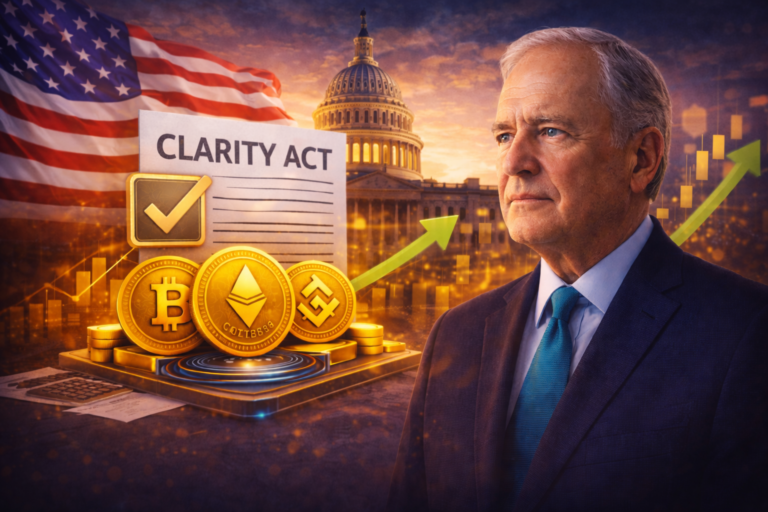
Treasury Secretary Scott Bessent says passing the CLARITY Act could stabilize markets, reduce volatility, and improve cryptocurrency investor confidence overall.
United States regulators are debating CLARITY Act that could reshape crypto oversight. Meanwhile, market sentiment is still weak in the middle of another broad downturn for digital assets. Consequently, watch is kept closely in Washington for regulatory direction by policymakers and investors.
Crypto Sentiment Tied to CLARITY Act Passage
Scott Bessent attributed the proposal to building investor confidence amid recent turbulence in the markets. Speaking on CNBC, he emphasized how clarity could reassure unstable trading conditions: He argued that uncertainty usually exacerbates fear during historically volatile sell offs.
Related Reading: Trump Pledges to Sign Major US Crypto Market Bill Soon – Ledger Tribune
Bessent said on February 13, 2026, that the passage of the Digital Asset Market Clarity Act is still very critical in keeping things stable. Therefore, he said better federal rules would give great comfort to markets. He put emphasis on progress towards a stable Wall Street level regulatory system.
He called on Congress to send the bill to President Donald Trump by the Spring of 2026. In addition, he said political delays could undermine bipartisan cooperation in support of the measure. As a result, the issue of timing has become a factor in discussions from financial and legislative circles.
The Digital Asset Market Clarity act aims for a unified federal oversight standards. Moreover, it suggests audits, disclosures and internal risk controls requirements strong. Supporters believe that consistent supervision could help reduce volatility and also improve investor protection as well.
Senate Process Stalls Amid Industry And Jurisdiction Disputes
The House earlier voted on its version in July of 2025 with bipartisan support. Lawmakers marked a rare vote of cross party agreement with a vote of 294-134. However, negotiations in the Senate stalled over matters of regulatory jurisdiction and scope of compliance.
The Senate Agriculture Committee passed provisions to cover digital commodity oversight in January 2026. Meanwhile, the Senate Banking Committee delayed markup sessions on the authority boundaries of the SEC. Therefore, uncertainty remained in the Securities and Exchange Commission classification powers.
Crypto companies such as Coinbase voiced their concerns with the DeFi nomenclature and the reward caps for stablecoins. Consequently, a number of executives ruled in favor and lawmakers delayed consideration in committee. Bessent said stalling efforts negatively affected wider industry progress and confidence.
If passed, the Act could help clarify oversight roles for major digital assets. Commodity Futures Trading Commission potentially supervises the classifications of Bitcoin, Ethereum, and Ripple (XRP). Meanwhile, the Securities and Exchange Commission would regulate qualifying securities offerings of the tokens.
The proposal would complement the GENIUS Act for the transparency standards of regulated stablecoins reserve. For example, issuers such as USDC providers would have tighter disclosure requirements. As such, policymakers hope for higher protections and greater investor confidence across markets.
Bessent reiterated the point that regulatory certainty is a support for innovation while ensuring consumers and financial stability. Moreover, he said that structured oversight could bring crypto closer to Wall Street standards. Therefore, lawmakers are under pressure to balance competitiveness, risk management and investor protection.
Investors are still watching Senate negotiations because of volatility and uncertainty which affects trading behaviour patterns. Meanwhile, market participants await decisions that could be long term regulatory direction nationally.
Ultimately, the destiny of the CLARITY Act could influence confidence, investment flows and adoption trends going forward.

Bilal Hassan is a seasoned crypto journalist with over five years of experience covering blockchain, digital assets, and global fintech trends. His work focuses on market developments, regulatory shifts, and the evolving landscape of cryptocurrency adoption worldwide.