
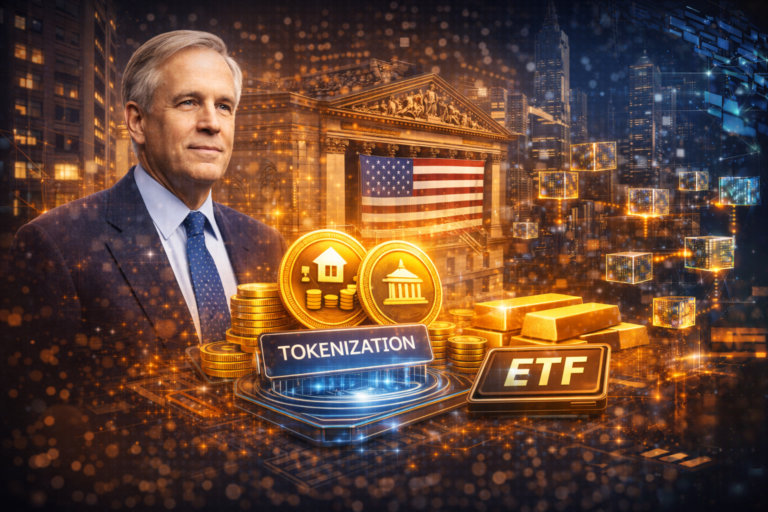
SEC Chair Paul Atkins predicts asset tokenization will move US markets onchain, boosting transparency, efficiency, and innovation by 2027.
Paul Atkins said tokenization of assets could soon reshape US capital markets. He explained that cryptocurrency tokenization increases transparency and predictability. Moreover, tokenization payments could bring modernization to the settlement systems. As a result, the markets could be able to move onchain within 2 years.
SEC Signals Shift Toward Onchain Markets Through Asset Tokenization
Paul Atkins said asset tokenization is a fundamental infrastructure change. He defined tokenizing meaning as digitally representing real assets on blockchains. Therefore, tokenized assets such as stocks and bonds, could settle on the spot. This shift could reduce counterparty risks to a large extent.
Tokenization has the potential to transform our financial markets—increasing transparency and creating greater predictability.
Under my leadership, the @SECGov is embracing innovation and working to provide clarity for market participants. pic.twitter.com/PyOxNdJZMv
— Paul Atkins (@SECPaulSAtkins) February 10, 2026
Atkins assumed that large markets might move fast. He anticipates the parts of the $68 trillion equities market to go onchain. Similarly, some parts of the $30 trillion Treasury market may follow. As such, securities tokenization could scale quickly.
He focused on settlement reform as a priority. Moving from T plus 1 to T plus 0 settlement is important. Tokenized system design enables assets and cash to exchange at the same time. As a result, capital efficiency could be improved across markets.
The SEC expanded Project Crypto in January of 2026. The initiative now comprises the CFTC. This effort is to reduce friction around the tokenization securities. Therefore, regulatory coordination is improving for tokenized asset growth.
Atkins also instructed personnel in modernizing trading rules. The Alternative Trading System framework is subject to change. These updates could provide for tokenized assets and hybrid trading platforms. Consequently, innovation may take off safely.
Institutional adoption already indicates readiness. Firms such as BlackRock and JPMorgan are bringing tokenized funds to scale. Their moves indicate asset tokenization infrastructure is maturing. Thus, market plumbing almost seem ready.
Examples of tokenization benefits include, according to industry experts: Repo transactions could alone unlock $252 billion value. Tokenized equity potential reaches $677 billion. These figures point out economic impact possibilities.
Regulatory Framework Supports Tokenization in AI and Finance
As of February 2026, integration is favored by the SEC over rules that are parallel. Tokenization define efforts are within existing securities laws. Therefore, tokenized securities remain regulated just like traditional assets.
Atkins said no change in security classification. A formal taxonomy is being developed. It will separate securities tokenization with the non security tokens. This clarity is conducive to compliance and innovation.
The SEC is considering tailored innovation exemptions. These may admit pilot programs for tokenized assets. However, there are still mandatory investor protections. As a result, experimentation is kept in control.
Tokenization in AI is also on the rise in the AI world. A access control for ai tokenized models may include ai tokens. Similarly, tokenized ai systems could efficiently handle data rights. These uses reflect more general tokenization nlp trends.
Global projections give more support to growth. The market size of tokenization is expected to reach $4.81 billion in 2026. Meanwhile, global RWA markets could reach $4 trillion to $30 trillion by 2030.
Atkins believes education is still important. Clear definitions help to explain tokenizing meaning to investors. Simpler language can raise the adoption confidence
Overall, asset tokenization seems to be at the core of market modernization. Regulatory clarity, institutional support and technology readiness focus. Consequently, US capital markets may soon go onchain.
Bilal Hassan is a seasoned crypto journalist with over five years of experience covering blockchain, digital assets, and global fintech trends. His work focuses on market developments, regulatory shifts, and the evolving landscape of cryptocurrency adoption worldwide.