
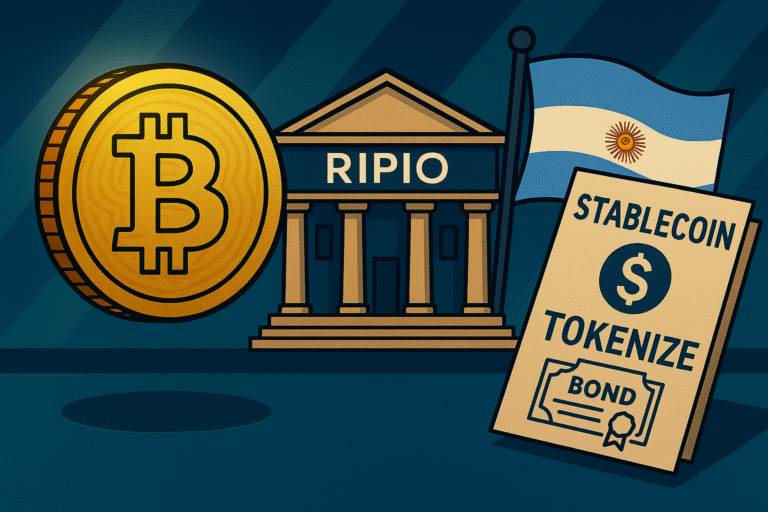
Ripio pivots toward local stablecoins and tokenized bonds, targeting regional payments, inflation protection, and long-term crypto infrastructure growth.
Argentine crypto exchange Ripio is reshaping its strategy amid expectations of slower crypto growth. Moreover, the company is focusing on stablecoins and tokenized bonds to grow long-term. CEO Sebastián Serrano explained 2026 as possibly lateral in crypto markets.
Ripio Positions Stablecoins as Core Regional Infrastructure
Ripio was established in 2013 and started as a retail-driven crypto exchange. Nevertheless, it has moved slowly towards a B2B infrastructure model. As a result, the company is currently serving banks, fintechs, and regional platforms.
Ripio now serves big clients such as Mercado Libre, in Latin America. Furthermore, its infrastructure enables companies to incorporate crypto services effectively. This shift minimizes the dependence on direct retail trading revenues.
Related Reading: Chainlink Brings 24/5 U.S. Stock Market Data Onchain With New Equity Streams – LedgerTribune
Serrano anticipates that the next decade of digital finance will be dominated by stablecoins. Thus, Ripio has introduced a number of local fiat-backed stablecoins. The products will help resolve chronic currency volatility within the region.
The exchange is now selling wARS, which tracks the Argentine peso. Likewise, it offers wBRL to Brazilian real exposure. It also favors wMXN which is pegged to the Mexican peso.
These stablecoins facilitate cross-border payments in local currencies. Consequently, the users do not depend on the US dollar and the high intermediary costs. This is aimed at daily trade and remittance.
Stablecoins, according to company statements, promote financial inclusion goals. A lot of Latin Americans are unbanked or underbanked. Hence, local currencies based on blockchain provide ready alternatives.
Bonds Tokens Enlarge the Real-World Asset Strategy of Ripio
Ripio is also entering tokenized sovereign debt alongside stablecoins. It notably introduced a tokenized bond of Argentina AL30. This bond is the most actively traded sovereign security of the country.
The AL30 token enables fractional ownership and better liquidity. This means that smaller investors are able to access what was formerly restricted by market size. This project is consistent with larger trends in the real-world asset tokenization.
According to Serrano the AL30 token appeared in over 1,000,000 units in October 2025 elections. That was done on one Sunday. The volume emphasized domestic demand.
The tokenized bonds also contribute to transparency and quicker settlements. In addition, they lower the friction of operations as opposed to traditional bond markets. Ripio intends to tokenize additional asset classes.
Future products involve real estate and commodity-based products. Thus, RWA tokenization is viewed as a significant source of growth at the company. This is in addition to its stablecoin-based payments strategy.
Business wise, Ripio has a B2B model that promotes scalability. Crypto tools can be integrated into partner platforms without developing infrastructure. This reduces entry barriers of traditional financial institutions.
Ripio Bets on Stablecoins to Anchor Regional Finance
Ripio has a goal of controlling asset worth of $100 million by 2026. The management thinks that stablecoins will stabilize that growth. The tokenized bonds are supposed to offer diversification.
In a broader sense, the approach is a response to regional economic realities. Capital controls and high inflation lead to demand of other financial instruments. In turn, the offerings of Ripio are aimed at the practical financial applications.
According to industry observers, there is a growing convergence of fintech and blockchain infrastructure. The shift of Ripio is similar to those of emerging markets. Hence, tokenized bonds and stablecoins can characterize local crypto acceptance.
Finally, Ripio is re-positioning through volatile market cycles. Cryptic volatility in the short-term persists, but the demand of infrastructure keeps increasing. Finally, stablecoins can define the future of digital finance in Latin America.

Bilal Hassan is a seasoned crypto journalist with over five years of experience covering blockchain, digital assets, and global fintech trends. His work focuses on market developments, regulatory shifts, and the evolving landscape of cryptocurrency adoption worldwide.