
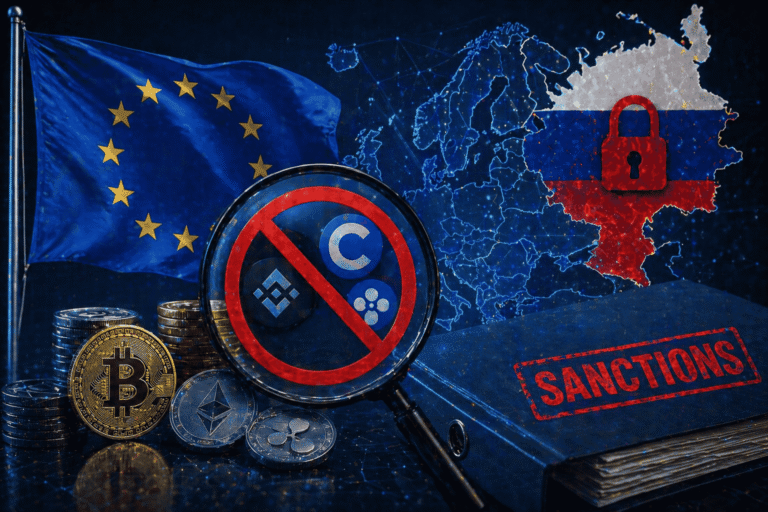
EU approves new Russia sanctions package targeting crypto platforms, banks, digital rouble, and stablecoins to tighten financial pressure further.
The European Union has approved its 20th sanctions package against Russia. This is the EU’s largest move in two years. And the latest package imposes significant restrictions on Russian crypto providers for the first time.
The sanctions add to the pressure on Russia’s financial, trade and banking sectors. But the crypto measures have attracted particular attention. They demonstrate that cryptocurrency is now on the international sanctions agenda.
EU Expands Crypto Ban Across Russian Sector
The EU has banned all transactions with Russian crypto providers. This includes services enabling transfers and exchanges of crypto assets. So, EU citizens and companies cannot access the Russian services.
Related more: France Pushes Tougher Crypto Rules Under EU MiCA Framework – Ledger Tribune
The package also prohibits cooperation with Russia’s digital rouble. This is a central bank digital currency that has not been fully operationalised yet. But the EU has acted pre-emptively to prevent future collaboration.
Moreover, RUBx transactions are now prohibited. RUBx is a stablecoin tied to the rouble and Russia’s digital finance initiatives. So, the EU is restricting current and future crypto assets.
It also targeted another token, A7A5. This stablecoin was said to have handled over $119 billion in transactions. The size of the transactions means officials are worried about sanctions avoidance.
The EU also imposed a full sectoral ban. This means broad restrictions apply to crypto providers based in Russia or Belarus. This could lead to the closure of many cross-border digital finance services.
This move is part of a European concern. Russia has already been heavily sanctioned. So, policymakers think it could be used as a backdoor.
Russian Banks and Foreign Networks Also Hit
The package also imposes transaction restrictions on 20 Russian banks. This puts more pressure on the Russian economy. So, international transactions may be difficult.
What’s more, four third-country financial institutions were targeted. EU officials said they assisted in evading sanctions or were connected to Russian payment systems. So, sanctions now extend beyond Russia.
One such network is the Russian System for Transfer of Financial Messages. It operates as an alternative to international banking messaging systems. But the EU wants to restrict external links to it.
The package also targeted a Kyrgyz entity. It was said to be a platform for trading A7A5. So the EU is keeping an eye on regional centres.
The package also prohibits “netting” with Russian agents. Netting can merge transactions and conceal parties. As a result, it can obscure blockchain transactions.
Regulators want to enhance tracing by preventing netting. This may make it more difficult to conceal financial connections. So, compliance checks may tighten.
Wider Pressure May Reshape Crypto Use
The sanctions take effect from May 24, 2026. The package contains trade and service controls, as well as finance regulations. It also includes cyber and tourism restrictions.
The regulations demonstrate the mainstreaming of crypto. Previously, sanctions targeted banks and shipping. But now cryptocurrency is a weapon.
The new restrictions could increase costs for Russia. The availability of payment rails, tokens and service providers may decrease. So alternative settlement may be more constrained.
The move has broader implications for the crypto industry. Stablecoin issuers and exchanges may be scrutinised more. So compliance may be more important than ever.
Some companies may exit risky markets. Others may increase their screening and identification processes. So, regulation could impact future growth.
The EU’s 20th package is more than a banking penalty. It is aimed at new digital financial networks. For this reason, it could set a precedent.
Other nations may follow suit if tensions persist. This may lead to more scrutiny of international crypto transactions. As a result, sanctions and blockchain are in a new era.

Bilal Hassan is a seasoned crypto journalist with over five years of experience covering blockchain, digital assets, and global fintech trends. His work focuses on market developments, regulatory shifts, and the evolving landscape of cryptocurrency adoption worldwide.